Undermining Emil: A Perilous Pursuit
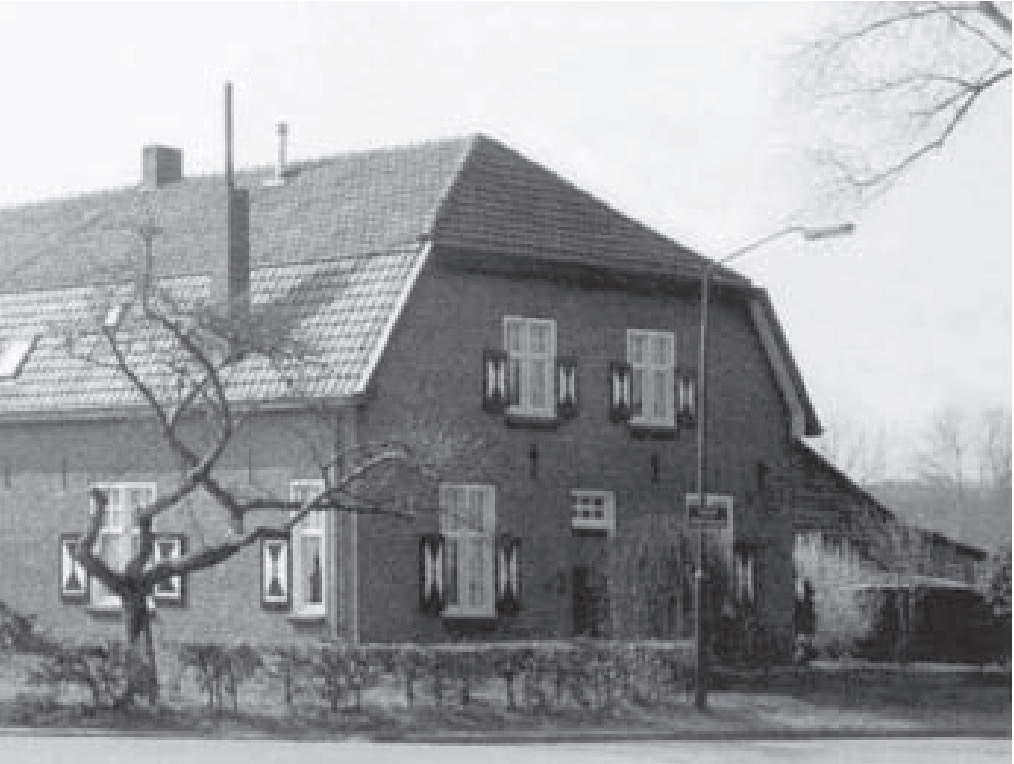
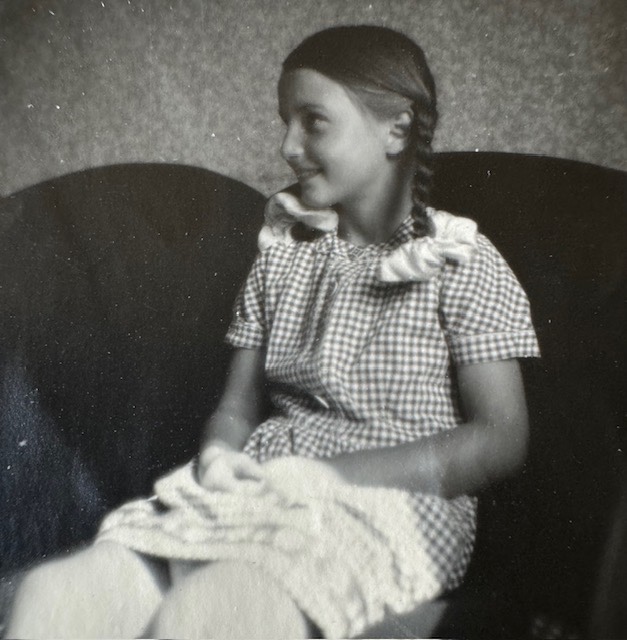
Nerissa Greenfield is a Dutch woman who has been living in Melbourne, Australia, for many years. She was born on August 2, 1937 in Eindhoven. During the Second World War, she lived in Eindhoven, including at Aalsterweg 267 and later at Jorislaan 10. Her father held a prominent position at Philips. She wrote a book in English titled Undermining Emil, with the subtitle A Perilous Pursuit. The preface of this book is dedicated to her memories of Eindhoven. She was eight years old during the liberation of the city on September 18, 1944.
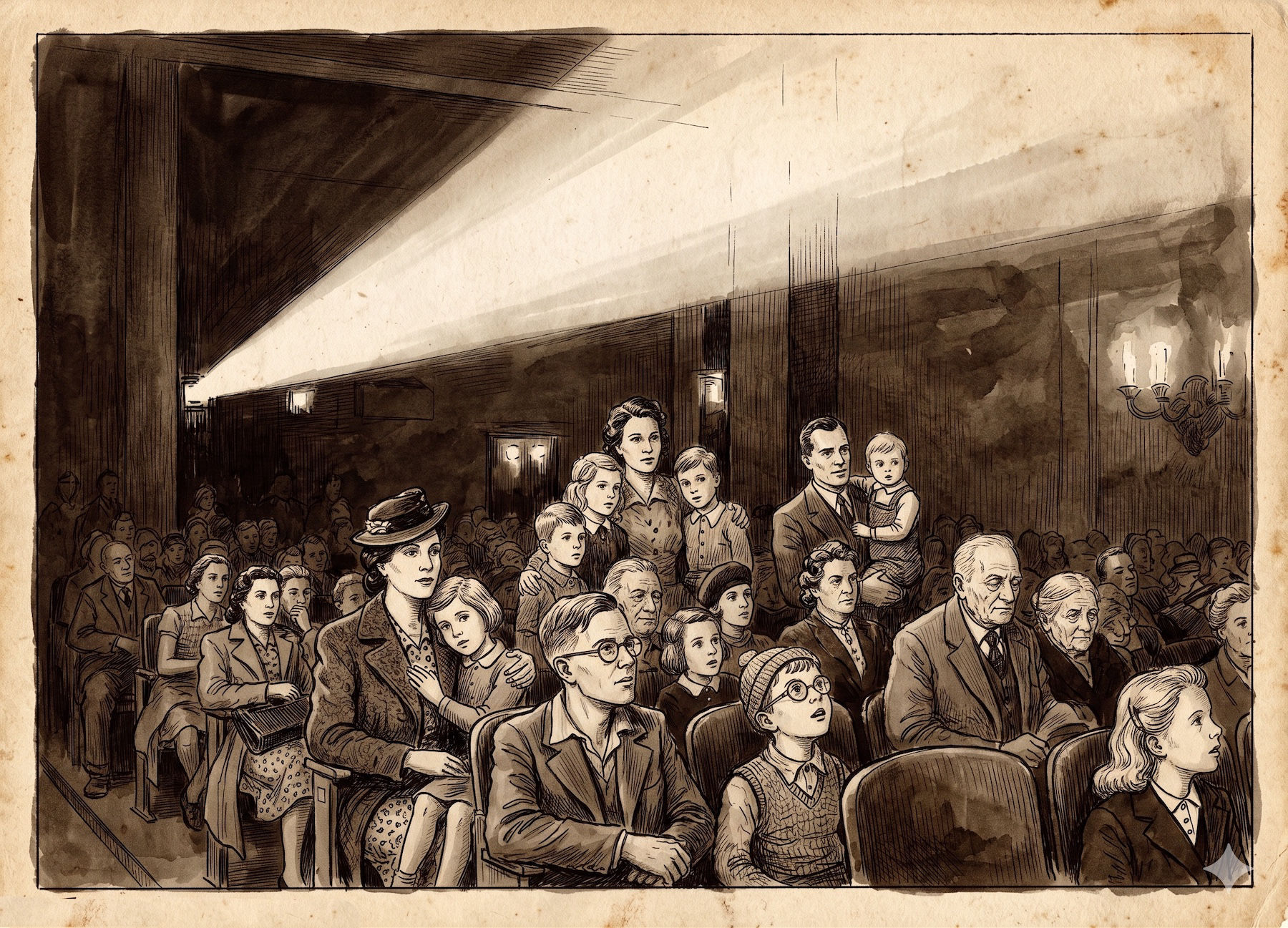
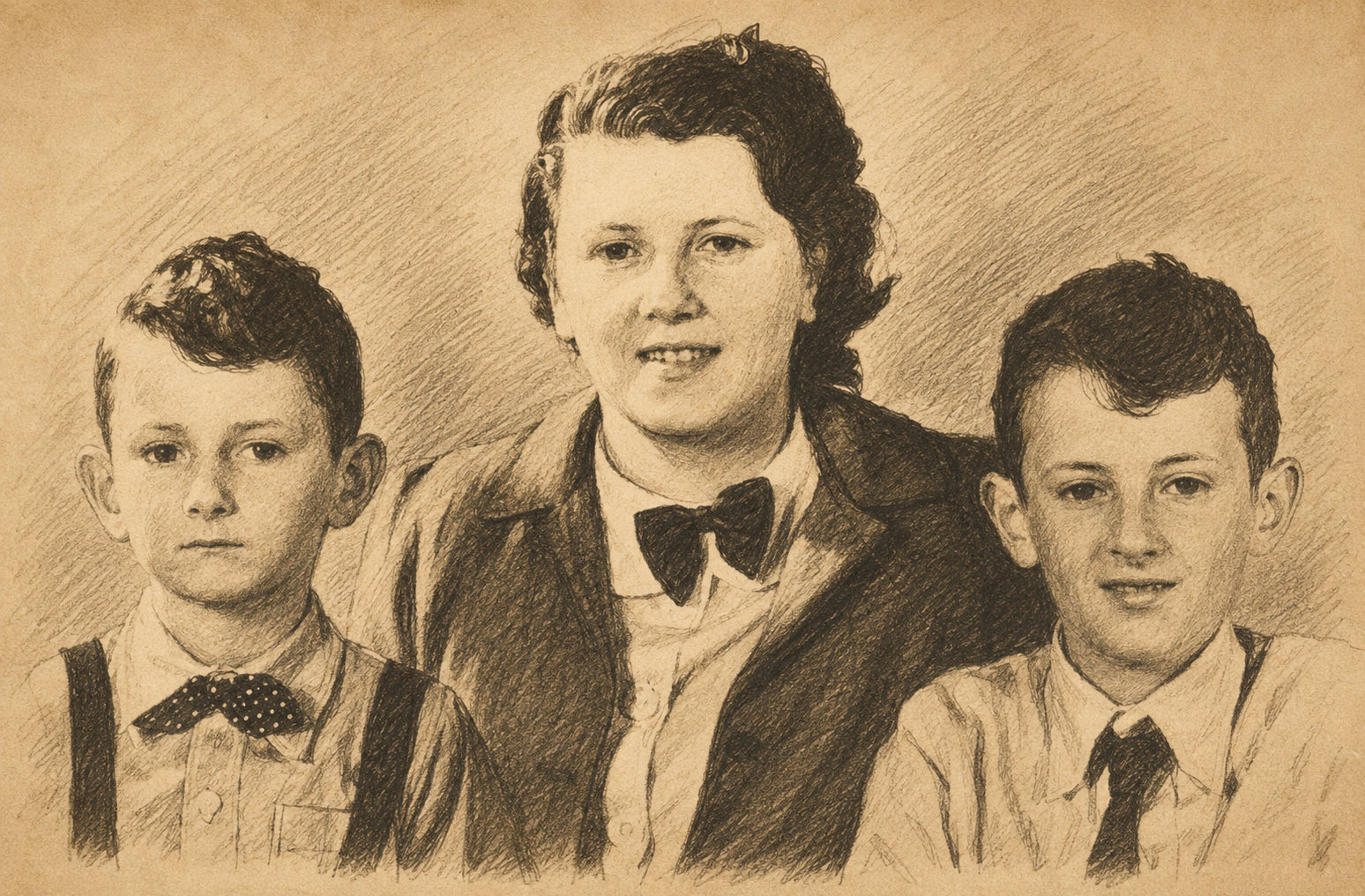
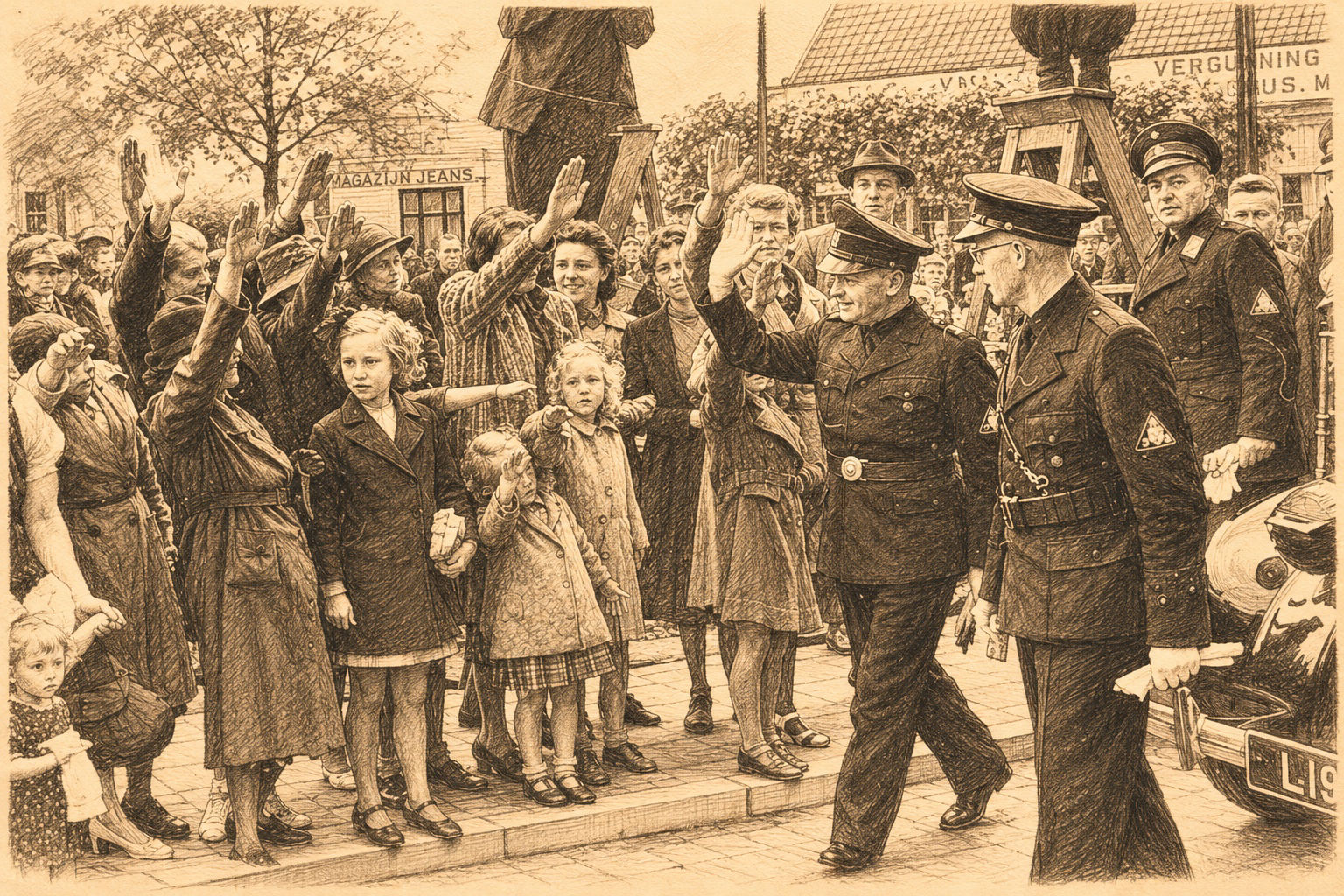
The images were generated by Google Gemini and some with ChatGPT, based on the stories written by Nerissa Greenfield.
Podcast: Parental_lies_and_the_secret_resistance.mp3 22 minutes
Dutch text on: https://www.eindhoven4044.nl/15/Groeneveld.html
Nerissa Groeneveld née Geach, born 13 May 1901 in Alexandra, Victoria, Australia, died April 1984 in Donvale, Victoria, Australia.
Yme Bouwinus Folkert Jan Groeneveld, born 12 December 1896 in Sneek, Friesland, Netherlands, died in 24 August 1981 in Valkenswaard, Noord Brabant, Netherlands.
I had just turned eight when on 18th September 1944 WW2 ended in my hometown, Eindhoven, in the Netherlands. That doesn’t make me an authority on this war. I do, however, have memories of that time, vivid ones (not gruesome).
On the 12th of May 1940 the German army marched in, and occupied Eindhoven. It was a bloodless take-over, and it was about three months before I turned three.
Time passed, and as the Germans tightened their grip, people’s thorough dislike of the mere presence of Germans in our town had, as it were by mental osmosis, settled in my four-year-old’s brain, and made me yell through the power point on the wall that separated our house from that of the German officers billeted next door. I was in no doubt that there was a long hollow tube into a dark distance, that would allow direct passage to those wretched Germans’ ears.
“Hush, they may hear you!” my mother said when I yelled with the full force of my conviction “Rotten Krauts!” (Rotmoffen in Dutch), but she didn’t look very serious when she said that, Mum, she even smiled a little.
It never occurred to me to wonder why the Krauts were rotten—they just were. No one disagreed. Everybody just knew they were.
Denn wir fahren, denn wir fahren ...gegen Engeland!
Bron foto "Collectie: Nederlands Instituut voor Militaire Historie
The German soldiers often used our street to march through. In straight formation they marched, three men wide and wearing helmets that were sometimes decorated with twigs and leaves.
When I asked why, Dad said “Camouflage.” and I said “Oh.” Dad must have been relieved the “Oh” wasn’t followed by the usual “Why?”.
The soldiers always made a lot of noise, straight-faced as they were too, and their iron-studded soles punished the cobble stones in perfect beat: one-two-three-four, one-two-three-four, and they were singing. My word: Were they singing!
They must have marched past our house quite a lot, as I can still remember (after many decades) the words they sang, in German of course, and I remember the melody as well. The words I didn’t understand at the time, except for “Engeland”. The words were:
Denn wir fahren, denn wir fahren
gegen Engeland!
(For we’re sailing, for we’re sailing
to take on England!)
The words were well suited to their marching rhythm. (Research, much later, revealed that it was a First World War sailors’ song.)
Unconnected with the sound these marching soldiers made, was the sound of sirens coming from somewhere far away. When they started up, continuously sliding upwards, then downwards between the two same notes—slowly up, then slowly down—slowly up and slowly down—on and on … Well, the first time I heard these glissando sounds I cried, they were so distressing!
My Dad saw me cry and gave me a little hug, then told me in reassuring tones “Factory whistles, just factory whistles.” When they started up again, he added “Just practising.” And then I repeated “Factory whistles.” looking up at Dad. Dad knew everything, and he nodded.
My Mum and Dad were wonderful, the way they protected me from the hard realities of war. In this case there was no need to tell the child we were being warned that war planes were on the way.
There was a community bomb shelter nearby. I don’t think we ever went there directly after those “factory whistles”. We didn’t need to we thought, and that was because we could go and sit in our little cellar, where we’d feel safe. Mum said we would be.
After the war was over, I sometimes went inside this community bomb shelter outside with my play mates, but I stopped going there because of the darkness and the smell of wet earth.
We had three bombardments in Eindhoven. The first one (the British had named it Operation “Oyster”, I found out later) happened to be on Saint Nicholas Day (the Dutch equivalent of Santa Claus) when the Good Saint gave kids that had been good all year some presents.
Eindhoven was (and still is) home to the very large factory that had started out manufacturing lightbulbs. Founded in 1891, it was named Philips after its founders. By 1940 it had grown into a large concern employing a huge number of people, including my Dad, who was a Chief Electro-technical Engineer. (Philips being smaller now, their HQ has been shifted from Eindhoven to Amsterdam.)
During the first years of the war, Philips was made to produce one-third of vacuum tubes for radios used by the German military. So on Saint Nicholas Day, on Sunday, 6th December 1942, the RAF targeted Philips, resulting in the loss of 16 out of 100 bombers, and unintended civilian targets were destroyed as well, so that 135 civilians were killed. It was a daytime raid to minimize killing civilians! This particular bombardment delayed production six months.
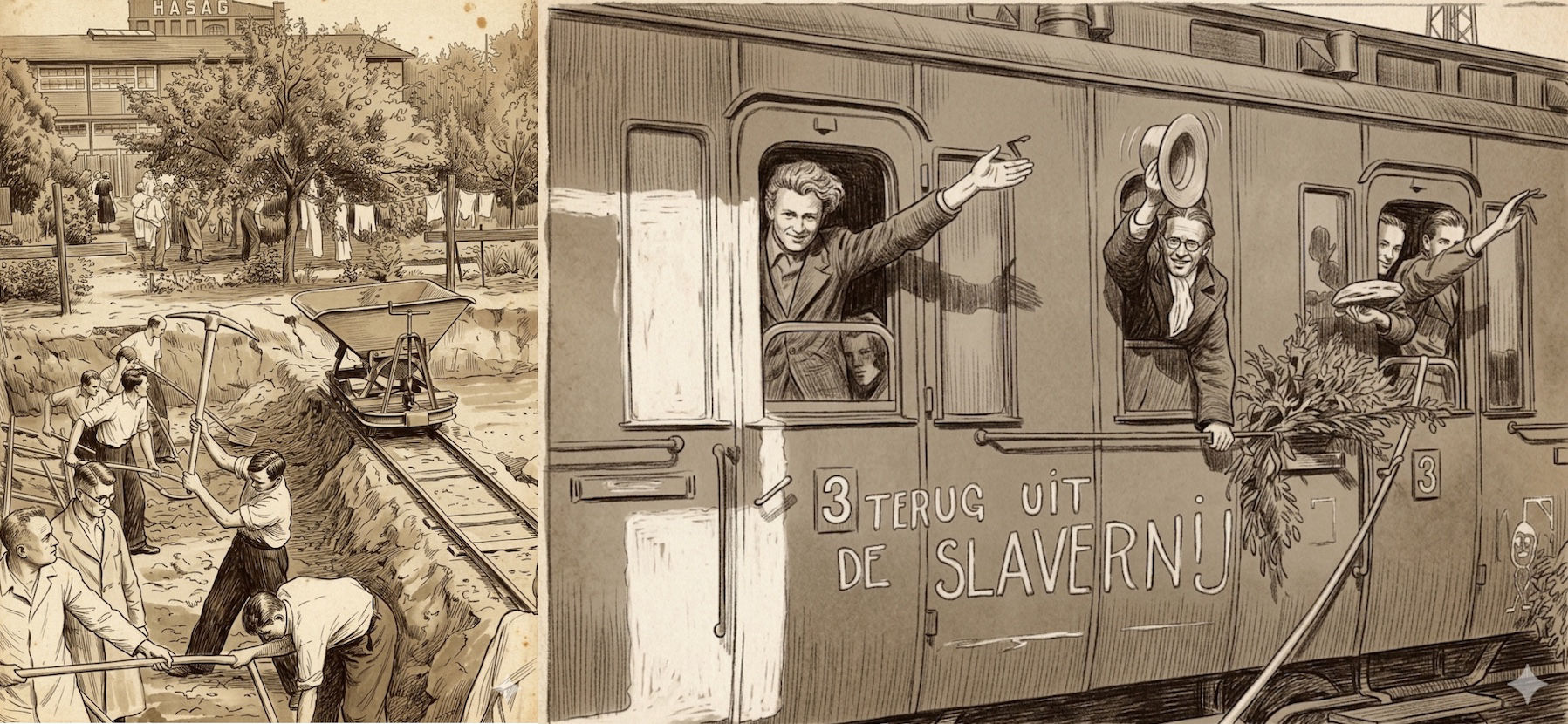
As a result of this bombardment, Dad’s Philips department was transferred to a cigar factory in Den Bosch, not far from Eindhoven as it would be a perfect camouflage to hide continued production.
After the war I heard he and the department personnel had secretly been producing miniature radios to hide in baby powder containers and hollowed out books for members of the resistance. After the doorman had signalled that German “quality control” had left the building, products destined for the German war machine were quickly replaced by what was needed to continue this resistance work.
The RAF’s second bombardment was on 30th March 1943. The target again was the part where Philips produced radio tubes. This time there was less damage, and there were 24 victims.
During both RAF bombardments I wasn’t in Eindhoven. During the first one I was with Mum and Dad in (what I saw in a child’s dimensions as) a huge farm shed that we shared with quite a number of other Eindhoven citizens, at a village called Aalst, a safe distance away. It was with Farmer Van Doormalen and his family, who we’d befriended while renting a small kitchen garden for at least a year, to supplement our food. I remember lots of golden straw strewn on the floor in that shed, and I thought it was good fun spending Saint Nicholas Day (6 December 1942) there, very exciting! I don’t remember any gifts from Santa, but (probably later) I picked up a rumour that the British military had forewarned the Dutch resistance, so they could move their families away from the raid in time. This may be true, how would you otherwise explain citizens having had time to get to a safe place before the event?
As I remember planting potatoes there, which normally happens during March, and the second bombardment was in March (1943), I can be confident that that was when I was staying with a friendly farmer, Zwetsloot and his large family. I wasn’t told my holiday there was due to a bombardment of Eindhoven, and no one talked about it.
Very fortunately, friends put me onto online information about where I was “parked” during the RAF’s second bombardment (in 1943). I remember the farmer’s name was Adriaan Zwetsloot.
Thanks to this internet source, I now know his farm was at the Achtereind (Rear end) area near Aalst, south of Eindhoven, and that during the war the farmer was asked to take in RAF pilots whose plane had been shot down, but he had no room for them, as they were already hiding Jewish citizens. That wouldn’t have been generally known … And I certainly wouldn’t have been introduced to them when I was the Zwetsloots’ little guest!
The farm has gone, probably long gone, but because I remember that a road called the Leenderweg was being built adjoining the farm when I was there, by finding that road on the Google map I could confirm the location (and also the accuracy of my memory …)!
September 19, 1944: sheltering in the cellar during the bombing
The third bombardment was suddenly unleashed by the Luftwaffe on 19th September 1944, a bit mean as it was the day after our liberation, and surprised us all while we were still partying and therefore totally unprepared for what followed. (Much later I learnt that it was aimed at slowing down the Allies’ ill-fated Operation Market Garden that went north of Eindhoven, to “a Bridge too Far” in Arnhem.)
As I said, I was eight then, and I have a pretty complete recollection of what was unfolding. This time there was no way my darling parents could hide or disguise the war situation from me, though they did keep calm and didn’t show the utter panic they must have been feeling.
Early in the evening the growing darkness of dusk was suddenly reversed by a strong yellow light that grew even stronger with bright streaks dripping down. Dad and I had hurried to our small, first-floor balcony at the back of the house, from where we could see that this strange light was everywhere, even over the centre of town. We soon realized this wasn’t an extension of the party.
“Flares!” Dad said, more to himself than to me. I heard invisible things whistling past at great speed.
“Shells!” Dad said, and “Come on, darling, let’s go
inside!”
The sound of planes was next … Just before we got inside, I quickly turned around and could see a plane in the distance, a small, black silhouette against the yellow sky. It was going down at an angle towards the horizon, down, down and further down, pulling along a flame that turned into a long-drawn-out thin trail of black smoke. And then—that was the end of it.
We hurried downstairs. Mum came towards us.
“What’s up?” she asked.
“Germans, I think.” Dad said.
“A bombardment?”
“I think so.”
She opened the cellar door for us, and just then it began: the roaring of planes. We all stayed calm, and when Mum went to the kitchen and found us an aluminium cooking pot each to wear as a helmet, we even laughed, but put them on after descending down the short staircase into our little cellar. You never know! The three chairs Dad handed down, barely fitted. Blankets followed for over our knees.
Probably no better prepared than most of our fellow citizens, one short and squat candle was all we had for light, and just one box of matches.
At the time fortunately I didn’t realise that nothing would have saved us, certainly not our cooking pots, and not even the three storeys of our house above us. A direct hit would have doubtless meant the end!
Even though nothing about this fatal possibility was put into words, uncontrollably our bodies seemed to understand and took over, mine too, and our teeth started chattering, and knees shaking. —Well, we survived. But 227 Eindhoven citizens didn’t that night, and about 800 were wounded.
Such knowledge didn’t reach my ears then—that goes without saying—and I doubt if these figures were even generally known then. Much later I discovered on the Internet the extent of these losses and injuries.
Not many days after the bombardment I did hear about a man and his little daughter *(we didn’t know them personally, though we knew his wife). The two had gone to their neighbours’ house for some trivial reason, and were killed by a direct hit. Wrong place—wrong time. A tragedy, and one of many that night.
The mandatory newsreels with Nazi propaganda that preceded a film.
Bron: https://beeldbankwo2.nl
At the time of course I had no way of knowing how the Nazis were treating their own people in Germany, and how from an early age they subjected them to unrelenting, continuous propaganda, so it’s only now, thinking about it, that I realise how fortunate we were that our school curriculum was spared this sick Nazi propaganda. During the war, our primary schools were still using material published from as early as about 1900 onwards, and our teachers weren’t Nazis.
However, in the German-supplied compulsory Newsreel in the cinemas, projected before the movie we were there to see, we did have to sit through hysterically jubilant commentators in these brief documentaries, showing German military successes and triumphant moments such as German military personnel gloating over a downed allied plane. And we weren’t spared the gross antisemitism with ghastly caricatures. What that was about I never wondered, and Mum wasn’t about to bring it up.
Some war-related words whispered in adult conversation weren’t meant for children’s ears. One was razzia (Here: Surprise SS raid to capture people as part of ethnic cleansing. The word has other definitions as well.) I gathered that whatever unpleasant thing that was, had happened in Amsterdam. It’s a fair bet that I asked what a razzia was, and what could the poor adult say? It had to be something very vague, and enough of an “explanation” to stop any further questions. Something like “A funny word, isn’t it? I don’t really know myself … I’ll tell you when I find out, darling.” Followed by a little hug. That would have worked.
Much later I found out that razzias had taken place in Amsterdam, so horrendous, that a huge strike followed in protest. The result was that, fearing that such strikes could become unmanageable, the Germans changed their methods. They now quietly started collecting betrayed Jews from their home to deport them to a camp, always just before daybreak so that there were no witnesses.
The project to lay stumbling stones
Which brings me to deportations in Eindhoven. As a child I was totally unaware that such activities existed. And after the war, for many years I had been considering Eindhoven lucky that we were spared. However, very recently I found out about “stumbling stones” (Stolpersteine in German).
The project to lay stumbling stones started in Germany in 1992. They consist of a 10-cm brass square affixed on top of a cuboid concrete block that’s installed into the pavement directly in front of a Holocaust victim’s last known voluntary residence. Stamped letter by letter by hand on the brass square are the introductory words (in the local language): HERE LIVED, followed by the individual’s name, date of birth and fate. For the vast majority that was deportation and murder.
At 107 Eindhoven addresses 274 of such stones have been placed in the pavement in front of the homes of Jewish people that had been forcibly removed by the Nazis, to be deported and transported to an extermination camp. So this shows how much escaped my notice as a child. I’m sure my young play mates were also spared such knowledge. And probably at the time many adults were spared the knowledge as well.
However, two doors away from us, lived a family with three children, my play mates. Their father was a sales representative for a swimwear factory (Tweka in Geldrop). Fairly recently I discovered on the Internet, that the Jewish factory owner (Jacques de Heer) was killed in The Hague in1943, aged 50. Our neighbour would have noticed his boss’s disappearance, but remained unaware of what ensued. My play mates, though, wouldn’t have been told anything by their parents.
Four close relatives of Jacques de Heer were also deported, either to Sobibor or to Auschwitz, each on a different date. They were taken away, and not one witness of the forced removal, except for the perpetrators, would have known what sort of place the victim had been transported to, and no one knew what happened there, as it was unimaginable. There was just no concept in anyone’s mind.
Sobibor, an example of such camps, was established in Nazi-occupied Poland in March 1942 and shut down in late 1943 after a prisoners’ uprising. Some 250,000 Jews died there. The Nazis didn’t want any trace to be found, and that’s why they shut it down having done their utmost to erase the buildings and human remains.
The Hornemann family
De familie Hornemann
When the Germans invaded the Netherlands on 10th May 1940 (Eindhoven on 12th May), the Philips top management had fled the country. This had been a well-rehearsed operation. But the Founder Anton Philips’s son, Frits Philips (then aged 35) stayed on in Eindhoven, and supervised by the Germans, ran the Philips company.
At first the Germans left the Jewish Philips employees alone; there may have been 100, maybe more, and I’m not sure what the exact number was. However, in late 1941 the Germans ordered that a “special department” be set up for them, at Philips. For a while that was the only change, but suddenly, on 18th August 1943, German troops surrounded the Philips plant, and arrested all the Jews, who were then sent to Vught, a concentration camp not far from Eindhoven. There they were put to work, making radios and a special kind of pocket torches not requiring batteries (called “pinch cat”, knijpkat in Dutch) for the German military.
The Philips workers at Vught got better treatment than the other inmates: They received extra rations and were given the special privilege of living with their wives and children. The wives had been told Philips could guarantee they’d be safe only if they joined their husband in the camp, so they felt they had no choice but to go.
One of those wives was Elisabeth Hornemann. The Hornemann family lived no more than two minutes away from my Primary School at the Akkerstraat, in Eindhoven. Their sons were Eduard (born in 1933) and Alexander (born in 1936). Their Dad, Philip Carel Hornemann worked at Philips. I didn’t know the family, but recently read about them.
Philip Carel was one of the Jewish Philips employees who along with his around 100 colleagues was taken to Vught concentration camp.
The boys’ mother, Elisabeth, and Alexander were hidden on a farm, while Eduard was taken in on another farm. Elisabeth was one of the wives who were tricked: promised she and her family would be safe, she collected her sons, and went and joined her husband at Vught concentration camp.
However, near the end of the war, on 3rd June 1944, they were all suddenly and without warning put on a train, in the process subjected to ruthless and cruel behaviour, and taken to another Dutch concentration camp in the north-east of Holland (Westerbork) and from there on to Auschwitz! They’d been used up producing items for the German war machine, all the while being made to believe they’d be spared. This being yet another example of cynical manipulation by the Nazis (Remember “ARBEIT MACHT FREI”? “Work sets you free”), very few survived. The Hornemanns didn’t.
This was revealed to me very recently, on the Internet. It was referred to as “The Philips Deportation”.
Another new word: “WRONG”
bron photo https://beeldbankwo2.nl
A mysterious war-related word I often heard whispered was “wrong” (fout in Dutch, pronounced “fowt”). As in “Watch out, be careful what you say! Mr or Mrs So-and-so is “wrong”! I gathered gradually that this person could not be trusted when they overheard anti-German comments. So he or she belonged to the wrong sort of people.
Radios prohibited
bron https://beeldbankwo2.nl
There was this ever-present undercurrent of mistrust. There was spades of that in Nazi Germany, not that we knew about that, as travelling was verboten (prohibited), which reminds me of cars being out of reach for all of us, except doctors and medical staff, or other emergency workers. Other prohibited items fairly soon included radios, to try and prevent listening to exiled Queen Wilhelmina’s hope-inspiring speeches from London. (Home-made miniature radios in unlikely containers and carefully hidden, as well as undeclared second radios, thwarted the enemy’s attempts at news blackout, and enabled quite a few to receive such broadcasts. Dad always had a Philips radio at home to improve and test—a nice excuse. But we had to be careful: Not too loud!!! Especially with Germans right next door!
The Hitler-appointed Head of State, Arthur Seyss-Inquart, aimed at preparing the Netherlands for existence alongside Germany as an Aryan district, which meant he had to win over the Dutch. (Apart from a handful of Nazis and Nazi-sympathisers, the Dutch were in no way inclined!) To achieve his aim Seyss-Inquart had to protect the nation from a greedy Goering, who, as part of his four-year-plan for the new Reich, wanted to suck all conquered territory dry by removing the raw materials needed for industries to be able to keep producing—which was not the way to win over the Dutch!
The solution was to keep Goering at bay and Philips alive by shifting the market for radios and other products to the German army. However, there was a twist when it came to payment—somehow the money was withdrawn from Dutch sources, such as government coffers and banks! (The Germans didn’t conquer to pay the conquered!) Somehow this worked, and Philips didn’t collapse.
Especially in May and June 1940, the first months of the invasion, there must have been dreadful panic and anxiety, not only for young Frits Philips and others who’d stayed behind to help him with the management, but also the thousands of employees and their families who would have no income! Managing to come to an agreement with Seyss-Inquart and other Germans, while keeping Philips afloat with all this turmoil going on, deserves enormous gratitude! In 2007, two years after his death (aged 100), a statue of Frits Philips was unveiled in the Eindhoven central market square, as a thank you for what “Mr Frits” had achieved (“Meneer Frits” in Dutch). His statue wasn’t placed on a pedestal, but only slightly elevated he stands shoulder to shoulder with the rest of us. A valid portrayal!
Bron: https://beeldbankwo2.nl
Keeping Philips afloat was in the German interests too, as what was produced could be transferred straight to the German military. Soon, with more and more young Germans being made to join the military, manpower in industry was reduced to such a level that orders placed at their own factories had to be placed at Philips instead. Then with an increasing number of German factory workers leaving to fight in the east, many dying in battle, or taken prisoner, German factories were nearing collapse as they were left with just a skeleton staff. This led to forcing men from occupied countries to become slave labourers in German work camps. They were made to work under appalling conditions and many died. As a result an increasing number of young men in Holland and elsewhere went into hiding. My half-brother did. (He hid at a Frisian farm.) And understandably resistance increased, and became well organized. However, quite a few were betrayed or discovered, arrested and executed.
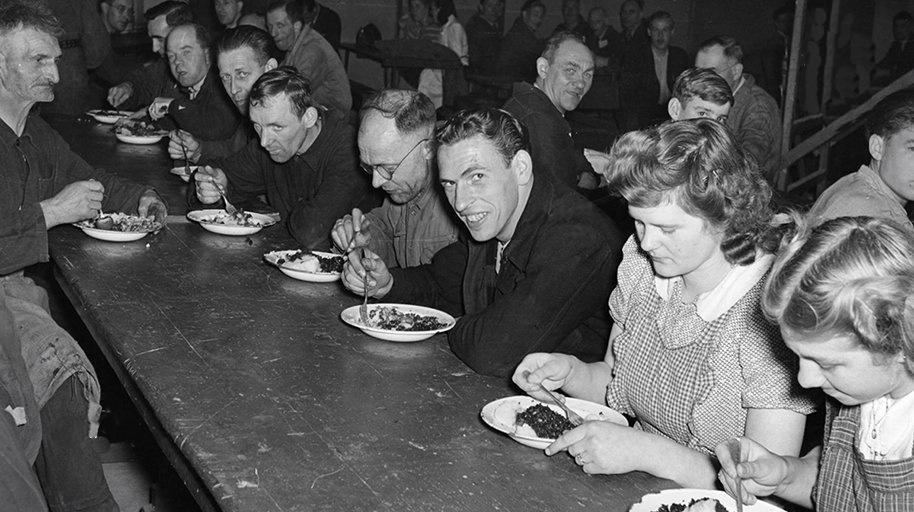
I never experienced any sort of disruption over the war years, money was never an issue—either that, or I was never told. But as Germany’s victories came to an end, hardship increased with shortages everywhere, Germany included. In the final war years, there was unemployment and real hardship, not that I was aware of this. But I do remember food supply became a problem, and Philips set up soup kitchens, where a meal of potatoes and vegetables mashed together was dished out from large vats, for employees, and their families were supplied as well. This food was called Philiprak, -prak (pronounced “pruck”) meaning “mashed”. This was a welcome supplement as early as 1942 I found out later, but it may have been even sooner. Nutrition could not be neglected if workers were to keep up production.
I heard the “black market” being discussed at the time, and people complaining about exorbitant prices. Of course this trade was illegal, so references were hush-hush.
Bartering also took place, and I still have a hotel dinner plate, one of a whole stack we once had, that a hotel had given my father in exchange for something that was hard to get otherwise. I never knew what that was. Maybe cigars?
Gypsies in town!
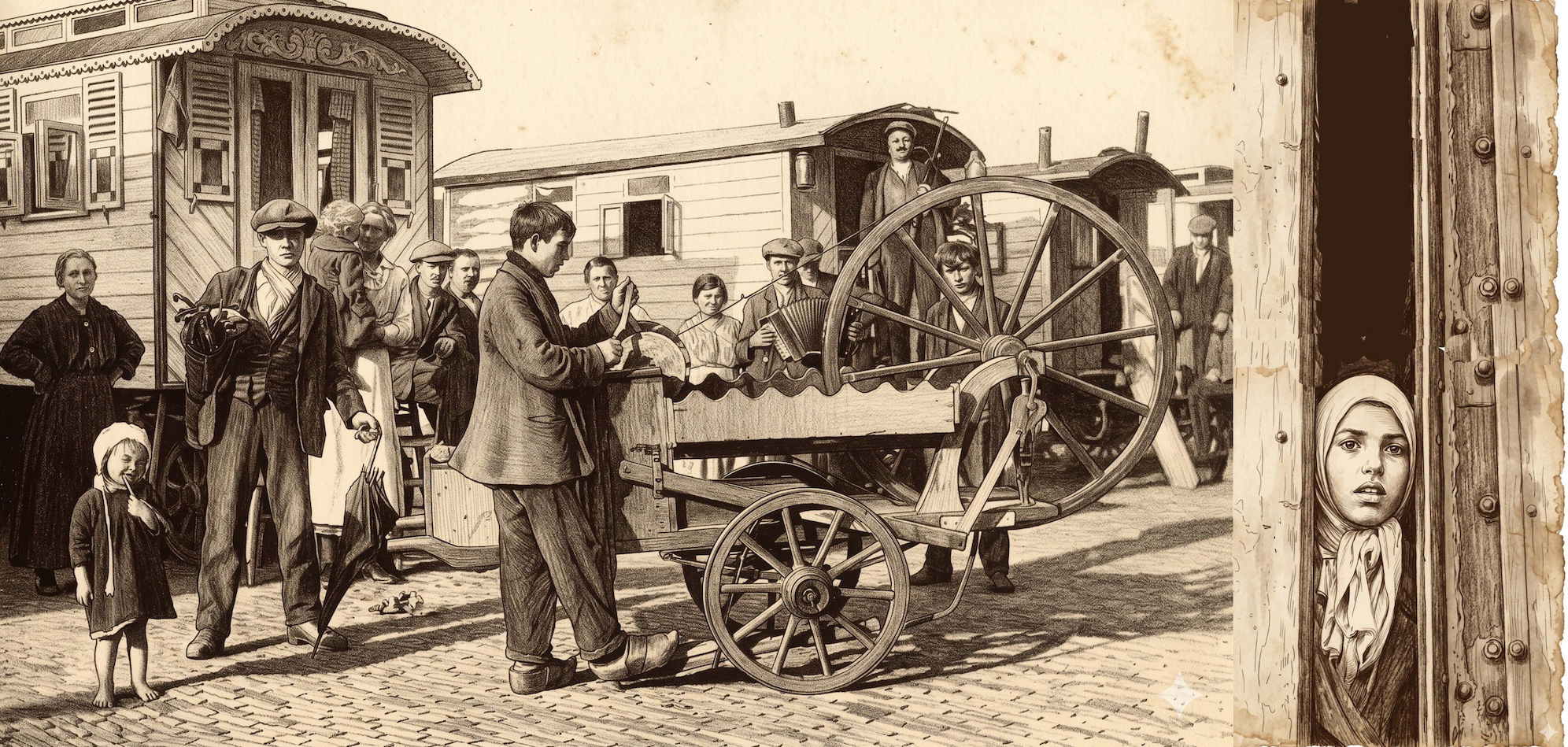
In the summer of 1943, when I was seven, Gypsies arrived on the outer edge of Eindhoven, in a group of about forty caravans on a site near the canal not far from us. In our streets they started mingling with other pedestrians, who regarded them with suspicion, or worse: declared them pests. They were so different: their clothes were different, they barely spoke Dutch, they begged, they allegedly stole, and they just weren’t welcome. Their women rang the doorbell unsolicited, offering to tell you your fortune, or trying to sell you magic charms, or baskets. Their men offered to sharpen your knives and scissors (at least that was useful). No one seemed to sympathise, or feel charitable towards them. We children took our cues from the grown-ups.
When word had just got out that the Gypsies had set up a camp nearby, I joined my friends. We were curious and in a small group we started crossing the large field that stretched out way ahead towards the canal. An adventure! Exciting!
At the canal we knew to follow it in the direction of the next village (Geldrop). [The concept of “right” not “left” was probably about a year too soon for some of us in our development.]
We took our time, it was warm and sunny, and on our way to the canal we picked daisies and pretty cornflowers. Clover clusters entertained the bees, and us too. A nice smell. We jumped and ran in short bursts, avoided patches of stinging nettles, and tried to catch white butterflies. We shrieked and laughed. We picked up sticks and fenced. We pulled faces at each other, poked out our tongues. We pushed each other around a bit. We then reminded ourselves that we were on our way to the Gypsies, and shouldn’t get side-tracked, but when we reached the canal, it meant that before anything else, we had to pick up pebbles and try to throw them right across the water to the other side. Too far! We all had a few goes, and that was fun!
We continued on, and then suddenly came upon them. There they were—the caravans. No horses. Three persons only: A silent woman who opened her door to see what was going on, and two boys of about seven standing near a pram that presumably contained a baby. We didn’t go right up to them, but stopped.
We stopped and stared, they stopped and stared. The two boys didn’t want to go near us either, or talk, and so we just stood there a while. That soon got boring, so we decided to turn around and leave. Not a word had been spoken.
What I learnt this morning (17th August 2023), was that on 22nd June 1943 the Gypsies (referred to as Sinti and Roma) were ordered by the Germans to start shifting their caravans from their scattered locations throughout the land, to larger camp sites outside nineteen municipalities such as The Hague and Eindhoven, where they then had to stay put.
This rearrangement made it very easy for the Germans to commit a large-scale Gypsy razzia a bit under a year later (on 16th May 1944). They went to these nineteen municipalities in Holland all on the same day, and arrested a total of 578 Gypsiesmen, women and children (42 from Eindhoven, most with German surnames; of those 42, only 3 survived). They deported them all to the Dutch transit camp of Westerbork, and were soon to be deported from there mostly to Auschwitz. That meant the end for most of them.
The German retreat was a spectacle to behold! Of course I wasn’t aware that quite a few citizens had a red-white-and-blue Dutch flag carefully hidden in their attic or some other safe place, a pole or broomstick handy, our flag ready to unfurl and thrust out of the top-most window to welcome the liberators!
Well, this day had almost arrived —not long to go, but the joy had to be suppressed just a little longer, and there certainly weren’t any spectators out in the streets. Humiliated as they were, and in the middle of a rushed and undignified withdrawal, the Germans might take it out on the Dutch. But there they were, heading north on any wheels they had, stolen or otherwise. Such a contrast with them until very recently triumphantly marching down the street in orderly formation! And singing …
Somehow my parents weren’t aware I was outside. I must have been the only spectator out on the pavement. Totally unaware I was at risk, and fascinated by this stream of Krauts hurrying past, I spotted an old soldier (he seemed old to me, but maybe he was just in his thirties). He was walking, and he looked funny, so funny! And he had a wobbly gait. That really set me off, and walking right behind him, I copied him.
A neighbour who was watching the goings-on from behind her ground floor window spotted me and rushed outside, quietly grabbed me by the arm, and pulled me inside, rapidly closing her front door. I’m sure she told me off, she would have, but I don’t remember any further details, except that somehow I ended up on the third-storey balcony of where some play mates lived further along. I had a wonderful view from up there, so exciting!
I recently found out the Germans had been instructed to regroup not very far north of Eindhoven, to slow down the Allies rushing north to secure some bridges on their way to entering Germany. And these Germans were still able to inflict some damage!
One or two days after the German bombardment (a “parting gift”), the population finally felt free, finally!!!—and now some citizens so inclined, having harboured and bottled up for such a long time a wish to take revenge, to get even—they started seeking out people who’d collaborated with the Germans.
Women were now targeted, who’d been known to sleep with Germans. They were an easy target. Collected from their addresses, they were put on carts, seated, then publicly had their hair shaved off, all of it! They may have been punched as well, and kicked, spat on or pinched, and verbally insulted certainly, but I don’t know because I think I wasn’t there, though I may have seen one such a cart, I’m not sure, but I may have just seen photos or films much later. However, I was very scared by something related at around that time.
I was playing in my neighbourhood, and passed a house where suddenly a woman came outside. She had no hair!!! I’d never seen a bald woman before, and being an eight-year-old, I got a terrible fright and screamed, running all the way home!
My parents said, “Oh, poor woman. She must have been very sick, and her hair fell out.” Good enough for me.
Undermining Emil : A Perilous Pursuit.
NERISSA GREENFIELD
ISBN 978-0-6489870-1-7 / ISBN 9 780648 987017
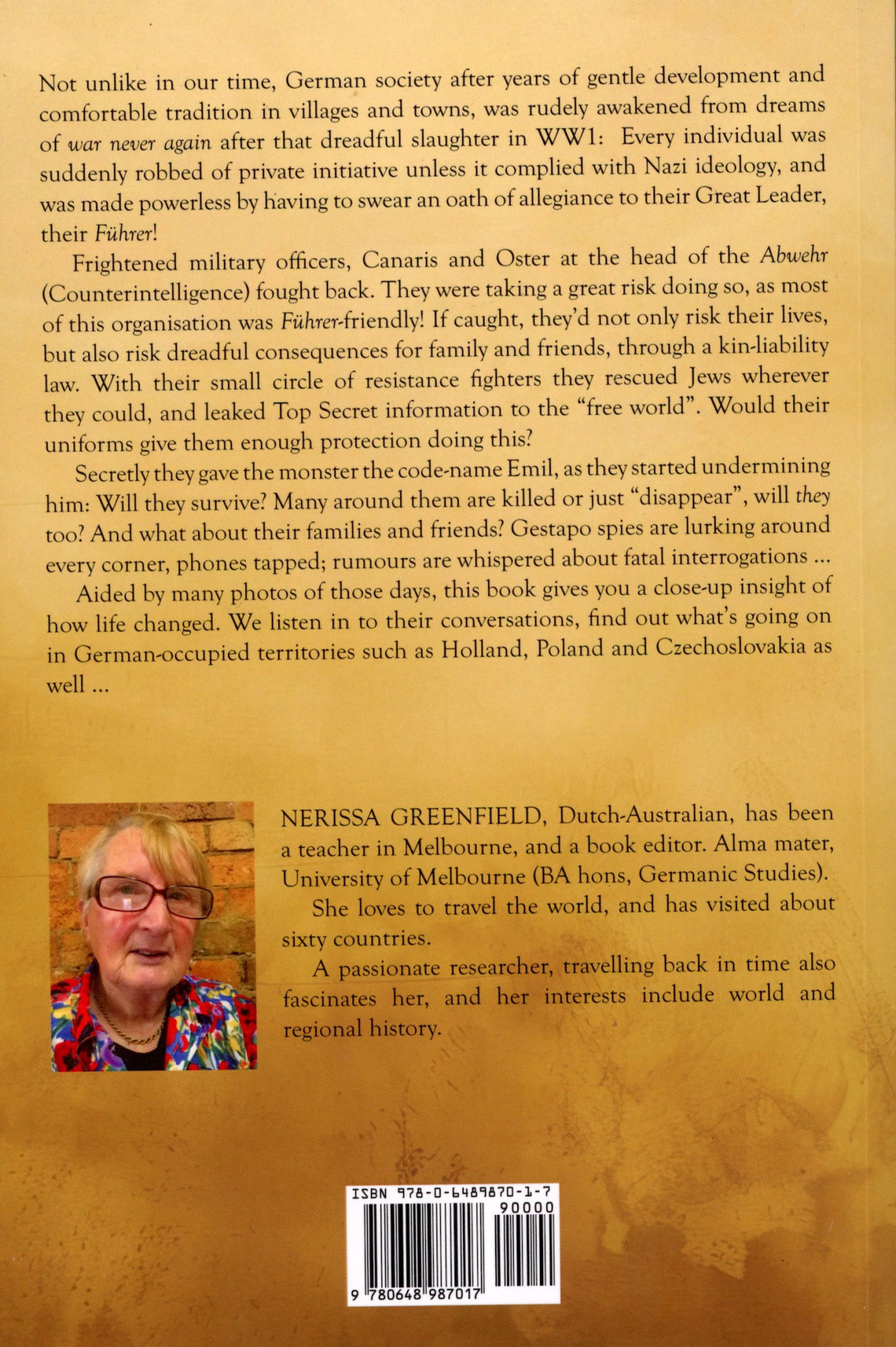
Not unlike in our time, German society after years of gentle development and comfortable tradition in villages and towns, was rudely awakened from dreams of war never again after that dreadful slaughter in WW1: Every individual was suddenly robbed of private initiative unless it complied with Nazi ideology, and was made powerless by having to swear an oath of allegiance to their Great Leader, their Führer!
Frightened military officers, Canaris and Oster at the head of the Abwehr (Counterintelligence) fought back. They were taking a great risk doing so, as most of this organisation was Führer-friendly! If caught, they'd not only risk their lives, but also risk dreadful consequences for family and friends, through a kin-liability law. With their small circle of resistance fighters they rescued Jews wherever they could, and leaked Top Secret information to the "free world". Would their uniforms give them enough protection doing this?
Undermining Emil : A Perilous Pursuit.
NERISSA GREENFIELD
ISBN 978-0-6489870-1-7 / ISBN 9 780648 987017
Secretly they gave the monster the code-name Emil, as they started undermining him: Will they survive? Many around them are killed or just "disappear", will they too? And what about their families and friends? Gestapo spies are lurking around every corner, phones tapped; rumours are whispered about fatal interrogations ...
Aided by many photos of those days, this book gives you a close-up insight of how life changed. We listen in to their conversations, find out what's going on in German-occupied territories such as Holland, Poland and Czechoslovakia as well ...
NERISSA GREENFIELD, Dutch-Australian, has been a teacher in Melbourne, and a book editor. Alma mater, University of Melbourne (BA hons, Germanic Studies)
She loves to travel the world, and has visited about sixty countries.
A passionate researcher, travelling back in time also fascinates her, and her interests include world and regional history.